
IoT-Powered Sensors from Packetworx to Boost Disaster Management in Victorias City: Deployment and Solution Perspective
Connected sensing helps public-sector teams move from episodic field checks to continuous situational awareness for LGUs, schools, public buildings, and critical community assets.
Executive Brief
- Focus area: Disaster risk reduction and public resilience.
- Connectivity model: low-power distributed sensing over LoRaWAN, supported by gateways, device management, dashboards, alerts, and integration-ready data.
- Solution fit: combine connectivity, packetSENSE devices, packetCELL gateways, packetVIEW, and partner enablement into a phased deployment.
- Implementation principle: start with measurable operational decisions, not with isolated devices.
The Local Flood and Disaster-Monitoring Problem
LGUs need early, local signals from waterways, drainage points, rainfall stations, public buildings, and vulnerable communities. Disaster monitoring becomes useful when readings are connected to response thresholds, escalation owners, and post-event review rather than sitting in a dashboard with no operating workflow.
tropical cyclones enter the Philippine Area of Responsibility on average
PAGASAloss threshold the Philippines has a 40% chance of exceeding from natural hazards in a given year
World Bank Climate Profilerainfall and water-level sensors are most valuable when tied to barangay- and facility-level action rules
Packetworx Victorias City use casePriority Use Cases
- Monitor rainfall, water level, drainage, river points, and flood-prone public assets for earlier local warning.
- Route threshold alerts to city operations, disaster-risk-reduction offices, school administrators, or barangay response teams.
- Review sensor history after events to improve alert rules, evacuation triggers, and infrastructure planning.
Resilience Context
Flooding, severe weather, infrastructure stress, and facility incidents become more manageable when responders see early indicators before the situation is already visible on the ground. LoRaWAN supports this model because sensors can be placed in drainage channels, waterways, school buildings, public facilities, and remote assets where wired connectivity is expensive or impractical.
Reference Architecture
- Sensing layer: low-power devices capture physical signals such as air quality, water level, rainfall, energy, motion, temperature, humidity, equipment status, location, or user feedback.
- Connectivity layer: LoRaWAN carries small telemetry messages over long distances to packetCELL gateways or compatible LoRaWAN infrastructure, with cellular or wired backhaul where needed.
- Network and platform layer: the LoRaWAN Network Server, packetVIEW, and partner platforms manage device identity, payload decoding, dashboards, alerts, reports, and APIs.
- Operations layer: facility teams, LGUs, campuses, integrators, or enterprise users act on exceptions, compare trends, and refine thresholds based on actual field behavior.
Packetworx Solution Stack
This use case can be implemented as a layered solution rather than a one-off installation. Relevant Packetworx building blocks include:
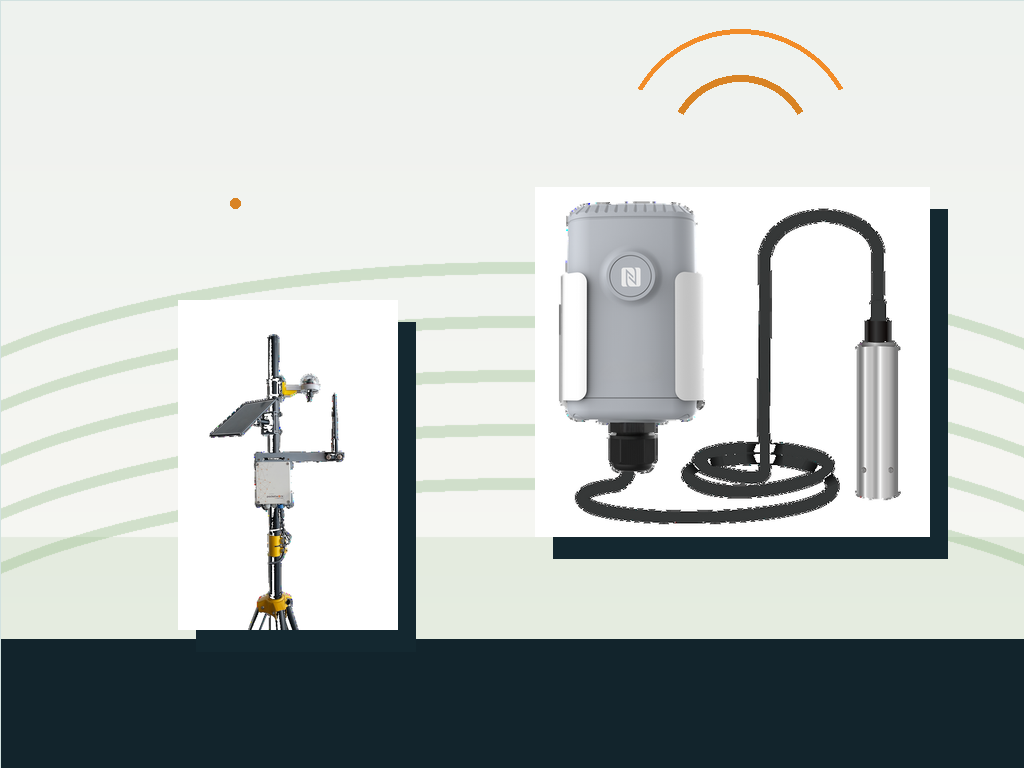
- packetSENSE Rainfall, Automated Weather Station, and water-level sensors for local hazard awareness
- packetSENSE Outdoor Air Quality, packetNOISE, and environmental stations for public-space monitoring
- packetSENSE Smart Ultrasonic Water Meter, pressure, flow, and totalizer devices for utility and drainage systems
- packetSENSE Compact Tracker and Badge for field assets, workers, and response equipment
- packetVIEW dashboards and alerts for city operations, school administrators, and response teams
Deployment Blueprint
- Define the operating decision first: alerting, reporting, compliance evidence, maintenance triage, resource optimization, or public-service coordination.
- Map the physical environment: sensor locations, mounting constraints, gateway placement, backhaul, power source, and field-service access.
- Select the sensing and integration stack: LoRaWAN devices, packetCELL gateways, packetMODBUS where legacy equipment is involved, packetVIEW dashboards, and APIs where the data must feed an existing platform.
- Set data rules before rollout: sampling interval, alert thresholds, escalation owner, historical reporting cadence, and exception-handling workflow.
- Pilot in a bounded area, review data quality and user behavior, then expand by repeating the same deployment pattern across sites, departments, campuses, or LGU locations.
Operational Metrics to Track
A successful rollout should define success measures before devices are installed. Useful metrics for this topic include:
- rainfall-to-water-level correlation
- threshold alert acknowledgement time
- public-facility condition status
- sensor uptime
- post-event review findings
Governance, Security, and Integration
LoRaWAN deployments should be treated as operational technology, not casual gadget projects. Device identity, gateway ownership, alert permissions, dashboard access, data retention, and API use must be clear before scale-up. For schools, LGUs, utilities, and enterprises, the same discipline also improves procurement: each phase can be tied to coverage, device count, operating owner, service-level expectation, and a measurable outcome.
Background Reading
The City Government of Victorias took a significant step forward in disaster preparedness on November 28, 2023, with the donation of advanced IoT-powered disaster monitoring sensors from Packetworx.
The donation ceremony was attended by Victorias City Mayor Javi Benitez and Disaster Risk Reduction Management Officer Rodolfo Retirado, alongside Packetworx Inc. Chief Executive Officer Jose Arnold Bagabaldo and Chief Commercial Officer Benigno Marasigan, who officially signed the deed of donation.
The donation included cutting-edge devices such as two packetSENSE Rainfall Gauges for precise rainfall monitoring, three packetLEVEL Ultrasonic Proximity Sensors for monitoring water levels at key bridges and rivers, and three packetSUBLEVEL Hydrostatic Pressure Sensors for real-time flood monitoring at street level.
In addition to the hardware, Packetworx granted the city free access to their LoRaWAN network and PacketView dashboard, which integrates seamlessly with the IoT sensors. This powerful combination allows for real-time data visualization, enabling early flood detection and proactive risk management.
During the event, Mayor Benitez expressed his gratitude to Packetworx, emphasizing how these technological innovations will strengthen Victorias City’s disaster management capabilities. He hailed the collaboration as a milestone in the city’s efforts to adopt smart technologies for better disaster resilience.
Packetworx CEO Jose Arnold Bagabaldo echoed the sentiment, expressing appreciation for the partnership with the city and reaffirming his company’s commitment to building IoT-ready smart cities across the Philippines.