
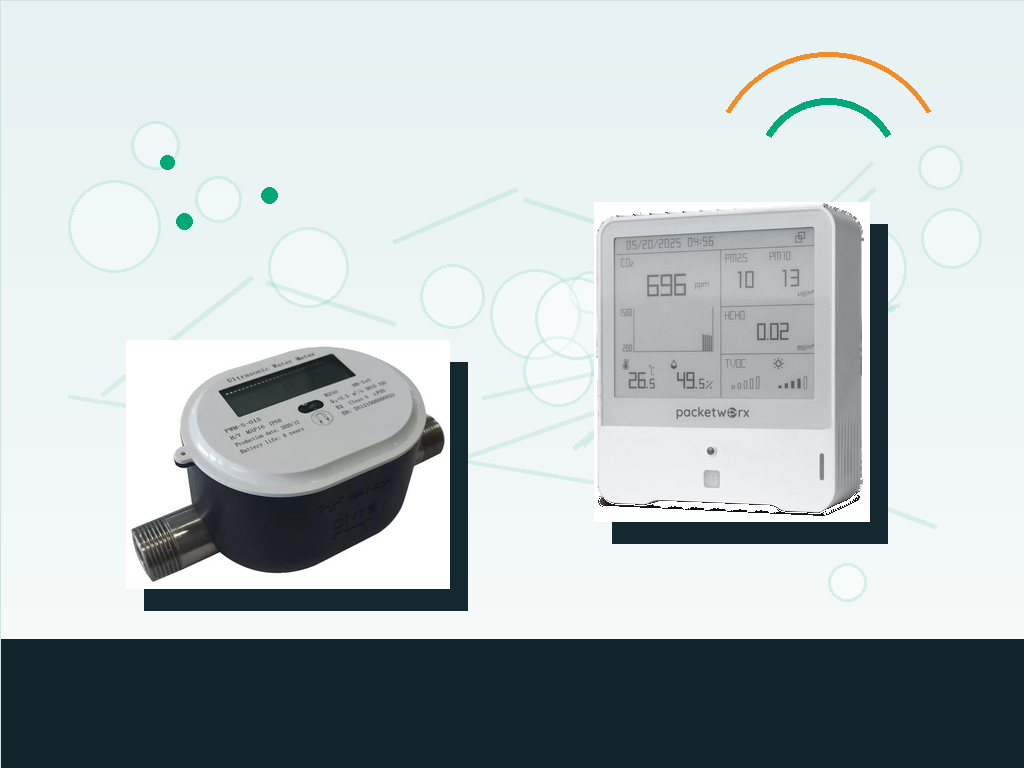
Packetworx to Accelerate the Adoption of Internet of Things in the Philippines: Deployment and Solution Perspective
The technical value of LoRaWAN is strongest when it is combined with coverage strategy, device interoperability, partner enablement, hosted platforms, and repeatable deployment patterns.
Executive Brief
- Focus area: LoRaWAN network, partnerships, and IoT market adoption.
- Connectivity model: low-power distributed sensing over LoRaWAN, supported by gateways, device management, dashboards, alerts, and integration-ready data.
- Solution fit: combine connectivity, packetSENSE devices, packetCELL gateways, packetVIEW, and partner enablement into a phased deployment.
- Implementation principle: start with measurable operational decisions, not with isolated devices.
The IoT Readiness Problem
Being ready for IoT means more than knowing the technology exists. Organizations need a real problem, device strategy, network plan, data owner, budget model, security posture, and operating workflow before sensors can deliver value.
LoRaWAN base stations were included in Packetworx and Actility's nationwide deployment plan
ActilityLoRaWAN use cases span cities, buildings, utilities, agriculture, logistics, and industry
LoRa AllianceIoT programs reduce risk when they begin with measurable decisions and expand after pilot validation
Packetworx FAQPriority Use Cases
- Start with one measurable decision such as leak response, classroom IAQ, utility loss, equipment uptime, flood monitoring, or energy accountability.
- Validate coverage, battery life, dashboard behavior, alert ownership, and field support during a bounded pilot.
- Scale only after users know which readings matter and how those readings change action.
LoRaWAN Adoption Context
LoRaWAN fits IoT workloads that need long range, low power, wide-area coverage, and modest payloads from many distributed sensors. For the Philippine market, the strategic issue is not simply whether sensors can transmit; it is whether enterprises, LGUs, schools, telcos, and integrators can build reliable programs on top of connectivity, gateways, device management, dashboards, and support.
Reference Architecture
- Sensing layer: low-power devices capture physical signals such as air quality, water level, rainfall, energy, motion, temperature, humidity, equipment status, location, or user feedback.
- Connectivity layer: LoRaWAN carries small telemetry messages over long distances to packetCELL gateways or compatible LoRaWAN infrastructure, with cellular or wired backhaul where needed.
- Network and platform layer: the LoRaWAN Network Server, packetVIEW, and partner platforms manage device identity, payload decoding, dashboards, alerts, reports, and APIs.
- Operations layer: facility teams, LGUs, campuses, integrators, or enterprise users act on exceptions, compare trends, and refine thresholds based on actual field behavior.
Packetworx Solution Stack
This use case can be implemented as a layered solution rather than a one-off installation. Relevant Packetworx building blocks include:
- packetCELL Outdoor LoRaWAN Gateway for field, campus, city, and industrial coverage
- LoRaWAN Network Server and packetVIEW for device onboarding, routing, dashboards, and alerts
- packetMODBUS for connecting industrial and utility equipment that already speaks Modbus
- packetSENSE devices across air quality, weather, water, power, motion, tracking, and safety use cases
- Partner integrations through REST APIs, system integrators, telcos, universities, and solution providers
Deployment Blueprint
- Define the operating decision first: alerting, reporting, compliance evidence, maintenance triage, resource optimization, or public-service coordination.
- Map the physical environment: sensor locations, mounting constraints, gateway placement, backhaul, power source, and field-service access.
- Select the sensing and integration stack: LoRaWAN devices, packetCELL gateways, packetMODBUS where legacy equipment is involved, packetVIEW dashboards, and APIs where the data must feed an existing platform.
- Set data rules before rollout: sampling interval, alert thresholds, escalation owner, historical reporting cadence, and exception-handling workflow.
- Pilot in a bounded area, review data quality and user behavior, then expand by repeating the same deployment pattern across sites, departments, campuses, or LGU locations.
Operational Metrics to Track
A successful rollout should define success measures before devices are installed. Useful metrics for this topic include:
- gateway availability
- device join success
- message delivery consistency
- battery replacement interval
- pilot-to-rollout conversion
Governance, Security, and Integration
LoRaWAN deployments should be treated as operational technology, not casual gadget projects. Device identity, gateway ownership, alert permissions, dashboard access, data retention, and API use must be clear before scale-up. For schools, LGUs, utilities, and enterprises, the same discipline also improves procurement: each phase can be tied to coverage, device count, operating owner, service-level expectation, and a measurable outcome.
Background Reading
Ortigas CBD, PHILIPPINES, August 22, 2018 - Packetworx, the leading Internet of Things (IoT) company in the Philippines, launched its brand with the campaign, ‘We Connect Things’last August 8, 2018. Its brand campaign, ‘We Connect Things,’ aims to promote Packetworx, as an enabler of IoT in the country with its full suite of end-to-end solution from devices, software applications to network connectivity.
The next Internet revolution: The Internet of Things
Internet of Things is the concept of connecting any device to the Internet and to the other connected devices. It is a network of things that sends, receives and collects information. According to a report of Software.org, a global research organization, in 2020 there will be about 50 billion devices connected to the internet. Packetworx aims to enable and equip the Philippines for this next internet revolution.
Packetworx as a driver of IoT in the country
Packetworx's mission is to accelerate the adoption of IoT in the country. It aims to equip and enable Filipino innovators and IoT enthusiasts to create IoT devices, applications and solutions. The IoT network is free for individuals and for non-commercial use. Packetworx uses leading LoRaWAN enabled solutions that provide long range sensors and control capable devices which allow wide range of IoT applications and total cost of ownership.
Packetworx, a social enterprise for creating smart communities
To achieve its goal to an IoT-ready Philippines, Packetworx's as a social enterprise, has three (3) major initiatives which anyone can be a part of (1) the IoT Technology Hub, the first free access co-working space dedicated IoT. It makes available computer, soldering stations, test equipment, pick and place and even reflow oven. It will enable IoT enthusiasts to develop devices, applications and solutions (2) free IoT hardware kits and free LoRa Academy curriculum for 100 schools and, (3) Free device sensors and network connectivity to 60 local government units for disaster-preparedness, air quality monitoring and safety.
Packetworx will be covering 80% of Greater Metro Manila by September 2018 and will be covering 90% of the Philippines by the end of the year. In the IoT Technology Hub, there will be a series of IoT Tech talks featuring IoT experts, hackathons and seminars.
Packetworx is a network provider of Internet of Things and a technology social enterprise which focuses on enabling IoT in the Philippines. It is a member of the LoRa™ Alliance, a worldwide alliance of over 500-member companies that support the standardization of LPWAN with the LoRaWAN™ specification and has created a certification and compliance program to ensure interoperability among its members.
It is the official host of the regional LoRaWAN™ network for Philippines and Southeast Asia through its partnership with The Things Network (TTN), the largest community of startups, businesses and developers globally building a public IoT data network.